
Blogs
Home > Blogs
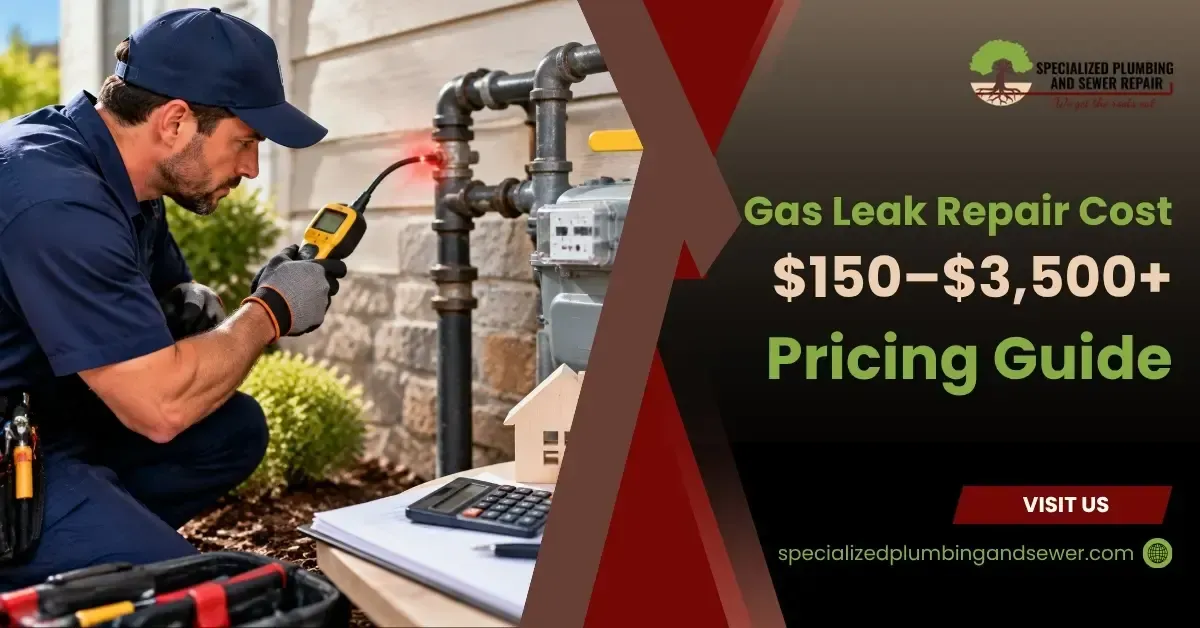
How Much Does Gas Leak Repair Cost? Complete Pricing Guide ($150–$3,500+)
Gas leak repair cost typically runs between $150 and $3,500 or more, depending on how severe the leak is, where it sits on your property, and whether the affected line belongs to you or the utility. At Specialized Plumbing and Sewer Repair, we walk homeowners through this pricing every day, so this guide breaks down exactly what drives your number up or down before you ever pick up the phone. Minor repairs like tightening a loose fitting sit at the low end. Buried or hard-to-reach leaks that require excavation push toward the high end.
Key Takeaways
Gas leak repair cost ranges from $150 to $3,500+
Price depends on severity, accessibility, and pipe location
Minor fixes cost least; buried/excavation leaks cost most
Full gas line replacement runs $3,000–$7,000+
Utility covers its side of the meter; homeowner covers the rest
Smell doesn't indicate leak location; mercaptan drifts with air
Plumbers use soap-bubble tests, gas detectors, and pressure tests
Homeowners insurance usually excludes leak repair (wear and tear)
Insurance may cover fire/explosion damage from a leak
Permits and inspection are required for most repairs beyond fittings
Confirmed leaks can shut off gas to the whole property
Delaying repair extends time without gas service
Accurate pricing requires an in-person inspection, not a phone quote
If You Smell Gas Right Now
Leave the house immediately. Don't flip light switches, light a match, or use your phone inside. Call your gas utility's emergency line or 911 from outside, then call a licensed plumber once it's safe to do so. Getting clear of the property comes before anything else, including cost.
Average Gas Leak Repair Cost by Severity
Most repair quotes fall into one of three tiers based on how much work the fix requires.
Severity | Average Cost | Typical Repairs |
Minor leak | $150 – $500 | Tightening loose fittings, replacing small connectors, fixing an accessible valve |
Moderate leak | $500 – $1,500 | Replacing pipe sections, fixing appliance connections, repairing indoor lines |
Major leak | $1,500 – $3,500+ | Buried or hard-to-reach leaks, excavation, restoring concrete or landscaping |
The jump between tiers usually comes down to access. A leak you can reach with a wrench costs a fraction of one buried under a driveway.
Gas Leak Repair Cost by Repair Type
Pricing also breaks down by what the plumber is actually doing on the job.
Repair Type | Average Cost |
Appliance connection repair | $100 – $400 |
Tightening loose fittings | $150 – $200 |
Sealing the gas line | $150 – $600 |
Replacing a valve | $250 – $750 |
Fixing a small pipe section | $200 – $500 |
Replacing gas line sections | $400 – $1,000 |
Buried gas line repair | $1,500 – $3,000 |
Full gas line replacement | $3,000 – $7,000+ |
Full replacement sits far above repair because it includes new shut-off valves, code compliance checks, and permits on top of the pipe work itself.
What Actually Determines Your Price
Four factors move the number more than anything else: how accessible the pipe is, what material it's made of (older galvanized steel costs more to work with than modern flexible natural gas lines), how deep or buried the line is, and whether the job requires a permit. Most municipalities require permit sign-off before a utility will restore gas service after pipe work, so a permit line item on your quote reflects that requirement rather than an upsell.
Is the Repair Free? When the Gas Company Covers It
You may not pay anything, depending on which side of the meter the leak is on. Gas lines generally split into two zones of responsibility: the utility typically owns and maintains the line up to the meter, and the homeowner is typically responsible for everything from the meter into the house. Where exactly that line falls varies by utility and by state, so treat this as a general pattern rather than a fixed rule. If the issue does turn out to be on your side, our gas line repair team can confirm the scope and give you an exact number.
Call your gas utility and ask them directly which side of the meter your leak is on. If it's on their side, they usually send a technician at no charge to you. If it's on your side, you're responsible for hiring and paying a licensed plumber. This distinction rarely shows up in generic cost guides, and it's worth confirming before you assume the bill is yours.
Why the Smell Isn't a Reliable Location Guide
The rotten-egg smell doesn't come from natural gas itself, it comes from mercaptan, a chemical added specifically so leaks are detectable. According to the Pipeline and Hazardous Materials Safety Administration, mercaptan disperses and drifts with airflow, so the spot where the smell is strongest in your house isn't necessarily where the leak actually is. Plumbers rely on instruments, not their nose, for exactly this reason. Skip trying to pinpoint the source yourself based on smell alone.
How a Plumber Finds and Fixes a Gas Leak
Diagnosis follows a set sequence rather than guesswork. A licensed plumber typically starts with a visual inspection of exposed fittings, connections, and visible corrosion. Next comes a soap-bubble test on suspect joints, where bubbles forming under pressure reveal the exact leak point. If the leak isn't visible or accessible, an electronic gas detector narrows the search along the line's path. For buried or fully enclosed lines, a pressure test isolates which section of pipe is losing pressure before any digging or wall-opening happens. An accurate quote almost always depends on this in-person process, which is why phone estimates for anything beyond a minor fitting rarely hold up.
What Happens If You Wait
A confirmed gas leak can get your gas shut off whether you're ready for it or not. Utility technicians and fire departments generally have the authority to red-tag a line and shut off gas to the entire property once a leak is confirmed, and service typically stays off until a licensed repair is completed and inspected. That means every gas appliance in the house, not just the leaking fixture, until the fix is verified. Shopping around on price after a confirmed leak usually extends how long you're without gas service.
Frequently Asked Questions About Gas Leak Repair Cost
Is Leak Detection Included in the Repair Cost?
Often, yes, if you hire the same company for both. Many plumbers waive or roll the detection fee into the repair cost when you proceed with the fix through them. If you want detection only, with no repair, expect a separate charge, and ask the provider for their specific rate since this varies by company.
Does Homeowners Insurance Cover Gas Leak Repair?
Usually not the leak repair itself. Homeowners insurance typically excludes maintenance-related issues like a worn fitting or aging pipe, since that's considered normal wear and tear, a point confirmed by the Insurance Information Institute. It may cover resulting damage, such as fire or explosion caused by an undetected leak. Check your specific policy, coverage varies by insurer.
Do I Need a Permit for Gas Line Repair?
For anything beyond tightening a fitting or swapping a small connector, usually yes. Most municipalities require a permit and inspection for pipe replacement or work that alters the gas line, and utilities generally won't restore service without inspection sign-off. Permit costs vary by location and aren't always included in a plumber's initial quote, ask directly.
How Long Does Gas Leak Repair Take?
It depends on severity and whether a permit is involved. Simple fitting or valve repairs are usually finished same-day. Jobs involving buried lines, excavation, or permit approval take longer, since inspection scheduling adds time beyond the repair work itself.
Ready to Get Your Gas Leak Repair Cost Confirmed?
Gas leak repair cost is hard to pin down over the phone because so much depends on access, material, and depth, which is exactly why Specialized Plumbing and Sewer Repair inspects the line in person before quoting a number. Our team can confirm whether it's a homeowner or utility issue and handle the permit and gas leak repair process from start to finish. We serve Roseville, Rocklin, Granite Bay, Lincoln, Loomis, Citrus Heights, and Folsom with upfront pricing and free estimates. Request your free inspection and get an exact number for your situation, not a guess.
