
Blogs
Home > Blogs
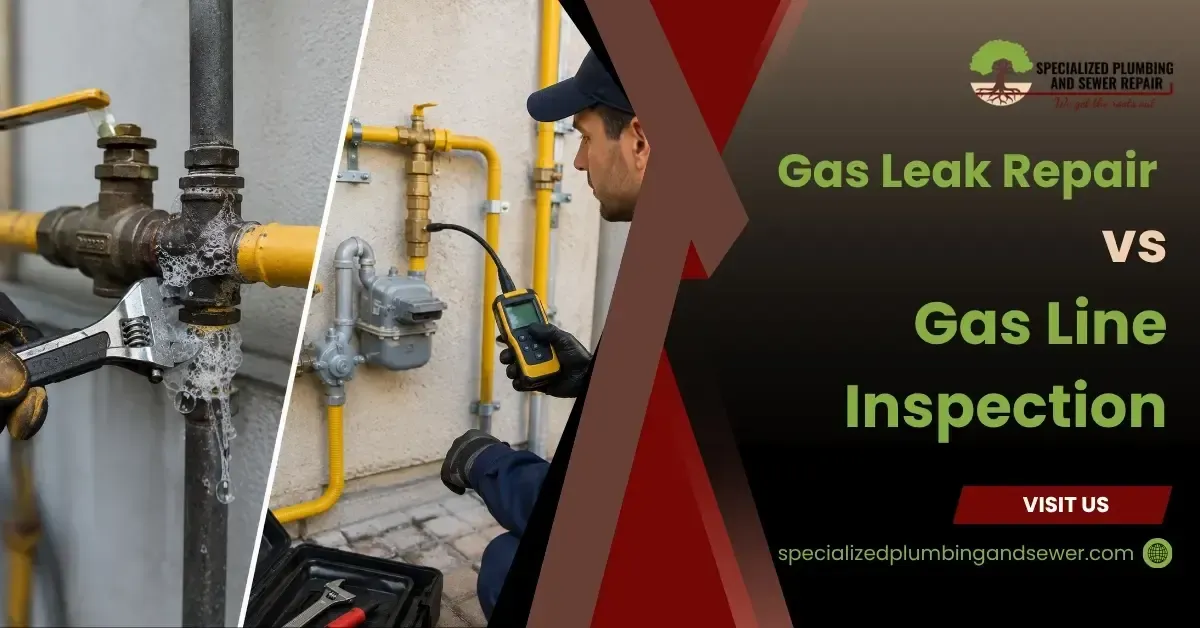
Gas Leak Repair vs Gas Line Inspection: What's the Difference?
TL;DR
They are not rivals; they are two steps. An inspection finds the problem. A repair fixes it. In most cases the inspection comes first.
Inspection runs $150 to $400 and takes 1 to 2 hours. Nothing gets cut, no permit needed, and you walk away with written findings on your gas system.
Repair runs $150 to $800 and takes 2 to 4 hours. The gas shuts off at the meter, new pipe goes in, and Roseville requires a permit plus a city sign-off.
Smell gas right now? Skip the inspection. Leave the house, call PG&E, then book an emergency repair. The full sweep happens after your home is safe.
A gas line inspection finds the problem, and a gas leak repair fixes it, so most homes need the inspection first.
These two are not competing choices. They are two steps in the same process. One tells you what is wrong. The other makes it right. Plenty of Roseville homeowners call Specialized Plumbing and Sewer Repair thinking they must pick one. Older homes here still run black iron pipe from the 60s and 70s, and that pipe hides trouble you cannot see. So gas leak repair vs gas line inspection: what's the difference? Roseville, CA comes down to timing, not choosing.
Gas leak repair vs gas line inspection at a glance
An inspection tells you what is wrong. A repair makes it right.
Purpose
An inspection hunts for trouble across the whole line. A repair targets one spot you already know about. One searches, the other fixes.
What the plumber does
An inspector checks every fitting, sweeps with a gas detector, and runs a gas pressure test. A repair plumber cuts out the bad pipe, threads in new, and tests the line.
Time on site
Plan on one to two hours for an inspection. A repair takes two to four. Buried pipe and slab access push both toward the longer end.
Typical cost
Inspections run $150 to $400 and stay predictable. Repairs run $150 to $800, and the price shifts with where the leak sits.
What you get
An inspection ends with a written report on your gas system. A repair ends with a working line that holds pressure. Information versus a fixed pipe.
Permit needed
Inspections need no permit at all. Roseville requires one for most repairs, and a city inspector signs off before your gas comes back on.
When you need it
Book an inspection before a problem shows or to confirm a smell you cannot place. Book a repair once someone confirms the leak.
How a gas leak repair and a gas line inspection differ
An inspection looks and tests. A repair cuts and replaces.
One touches your pipe, the other does not
Nothing gets cut during an inspection. Your gas supply stays on the whole time in most cases. A repair shuts the gas off at the gas meter and opens the line.
The tools are different
An inspector carries a gas detector, a soapy spray bottle, and a pressure gauge. A repair plumber brings a pipe cutter, threading tools, new fittings, and pipe dope.
The timing is different
You book an inspection when nothing is obviously wrong. You book a repair when something clearly is. That gap in urgency answers gas leak repair vs gas line inspection: what's the difference? Roseville, CA for most people.
What is a gas line inspection?
A gas line inspection is a full check of your gas system to find leaks, rust, and weak spots before anything fails.
Nothing gets cut. We look, test, and write down what we find. That report tells you whether your line needs work or whether it is fine.
Here is what a professional gas line inspection covers:
We walk the gas line and check every fitting and valve we can see
We sweep each connector and appliance with a detector
We brush soapy water on joints and watch for a bubble
We run a pressure test at the meter and hold it at set psi
We probe buried runs when needed
We check ventilation around your heater and other gas appliances
We hand you written findings
A pressure test is the part that matters most. It catches hidden leaks you could never smell. Natural gas carries an added odor, but a small leak inside a wall can pass unnoticed for months.
What is gas leak repair?
Gas leak repair is the hands-on fix, where a plumber cuts out the bad pipe or fitting and puts in new. An inspector finds it. A licensed plumber repairs it. Here is how the job runs:
We pinpoint the leak with a detector or soapy water
We shut the gas supply off at the meter
We cut out the faulty fitting or a short pipe section
We install new pipe and thread it tight
We run a full pressure test on the finished line
A city inspector signs off before gas returns
Most Roseville repairs run $150 to $800 and finish the same day. Roseville requires a permit for most gas line repair work, and that keeps you in line with local building codes.
Which comes first, inspection or repair?
Inspection comes first in almost every case, unless you smell gas right now.
When inspection comes first
Your gas bill climbed and your usage stayed flat
A faint smell comes and goes
You are buying or selling a house
Your pipe runs over 40 years old
You plan a renovation or a new appliance installation
You want a periodic check for gas safety
When repair happens right away
You smell gas now
PG&E shut off or red-tagged your meter
A burner or pilot will not stay lit
You hear a hiss near a connection
An active leak skips the paperwork. We shut the gas down, find it, and fix it. The full gas leak detection sweep happens after your home is safe.
Why skipping the inspection costs more
Patching the one spot you can smell leaves the rest untouched. Two weeks later, another loose fitting goes. Now you pay a second trip charge and lose gas again.
Which one do you need right now?
Find your symptom below and you will know which call to make.
That last row matters. Escaping gas cuts oxygen in a closed room. Carbon monoxide from a bad appliance does worse. Both turn life-threatening fast, and neither one waits for an appointment.
Common causes of gas leaks in homes
Old pipe, loose fittings, and bad appliance connections cause most gas leaks in homes.
Corrosion on aging pipes, common in Roseville homes built before 1980
Fittings that loosen as pipe expands and contracts
Flexible connectors behind a range or dryer that crack with age
Poor installation during a past remodel
Damage from digging in the yard
A valve that no longer seats tight
Buried pipe sits in damp soil through a Roseville winter. Wet soil makes metal corrode faster, so buried runs fail sooner than pipe inside your walls.
Warning signs your gas line needs attention
A rotten egg smell, a hissing sound, and dead grass over a buried line are the three signs you cannot ignore.
Rotten egg smell near an appliance or the meter
Hissing you can hear when the house is quiet
Dead grass in a straight line across the yard
Gas bill climbing with no change in usage
Orange or yellow flame instead of blue
Rust or white scale on the pipe
Headaches, nausea, or dizziness that clear when you leave
Raw natural gas is odorless, so the gas company adds the smell on purpose. That odor is your warning system. Trust it every time.
What happens after the inspection
You get written findings, a clear recommendation, and one price, then you decide what happens next.
We show you what we found, including photos of any bad spots
We tell you whether you need a repair, a replacement, or nothing
You get one price, not a range
Nothing starts until you say go
Charles Hartranft started Specialized Plumbing and Sewer Repair in 2009. He works as a master journeyman plumber with over 20 years in the trade, and every technician on our crew trained under him. We pull permits with the City of Roseville to ensure compliance on every job.
FAQs
Can a plumber repair a leak without inspecting first?
Yes, on an active leak we fix it right away. A full inspection afterwards confirms the rest of the line is safe.
How often should I get a gas line inspection?
Every two years for most homes. Older homes with pipes over 40 years old should book one every year.
How long does a gas line inspection take?
One to two hours for an average Roseville home. Buried runs and extra appliances add time to the visit.
Does a gas line inspection need a permit?
No. Inspections need no permit. Repairs and replacements do, and your plumber pulls it for you.
Will PG&E inspect my gas line for free?
PG&E checks their side of the meter and responds to leak calls. The pipe inside your property is yours to maintain.
Book the inspection first, then decide
We check your line, hand you the findings, and quote the repair only if you need one. No pressure and no guessing. Still stuck on gas leak repair vs gas line inspection: what's the difference? Roseville, CA? Call or contact Specialized Plumbing and Sewer Repair for real peace of mind at home.
