
Blogs
Home > Blogs
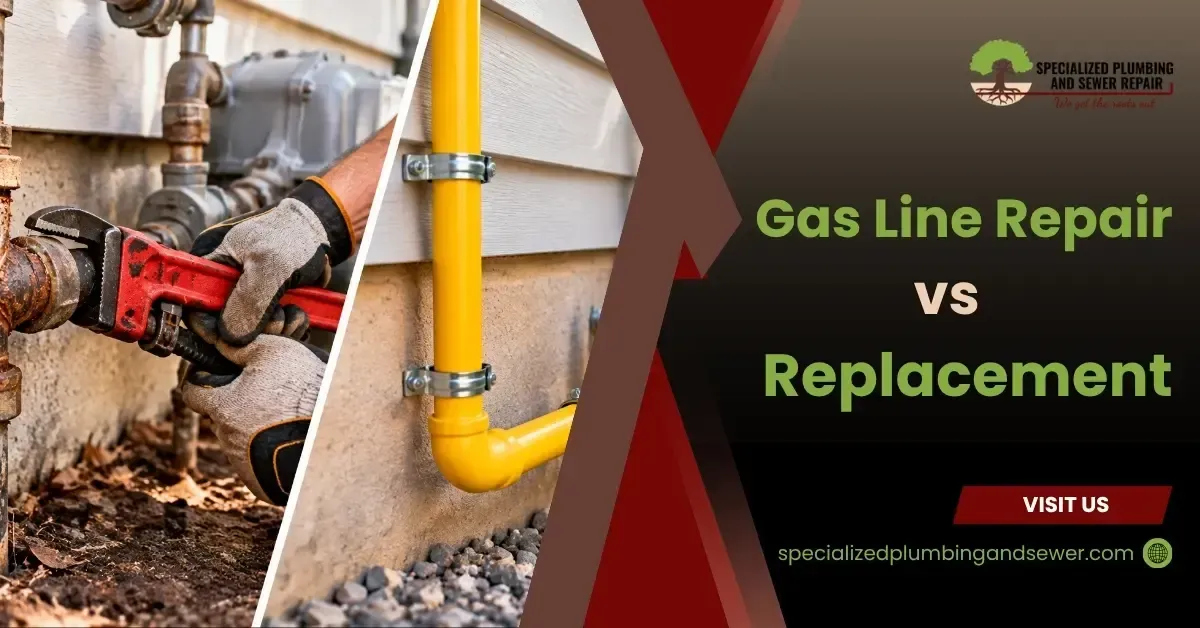
Gas Line Repair vs Replacement: Which Is Safer for Older Pipes?
Replacement is safer for older gas lines with widespread corrosion or repeated leaks, while repair works fine for younger pipe with one isolated problem. The real question isn't which option sounds cheaper. It's whether the rest of the line is still solid or already breaking down in places you can't see yet.
Homes in Roseville and Rocklin built before the 1980s often still run on galvanized steel gas pipe. That pipe was standard for decades, but it corrodes from the inside out, and corrosion doesn't stop at the spot you found. That's why this decision matters more than most homeowners realize.
Key Takeaways
Repair works well for gas lines under 15 years old with one isolated leak
Lines over 20 years old with repeated leaks or heavy corrosion should get replaced
Galvanized steel pipe corrodes internally, and one visible leak often means more damage nearby
Multiple leak locations point to a systemic problem that repair alone won't fix
Specialized Plumbing and Sewer Repair inspects the whole line before recommending either option
Repair vs. Replacement at a Glance
The right choice comes down to pipe age, how many leaks you've had, and how far the corrosion has spread. Here's how the two options stack up side by side:
Factor | Repair | Replacement |
|---|---|---|
Best for | One isolated leak in an otherwise healthy line | Multiple leaks or corrosion in more than one spot |
Typical pipe age | Under 15 years old | Over 20 years old, especially galvanized steel |
Average cost | $150 - $1,000 | $3,000 - $10,000+ |
Time to complete | Usually a few hours | Can take one to several days depending on scope |
Risk of recurring leaks | Higher if corrosion is already spreading | Low, since the whole line is new |
Long-term safety | Safe only if damage stays isolated | Removes the underlying corrosion problem entirely |
Best for
Repair: Works when you've got one clean, contained leak and the plumber confirms the rest of the line checks out fine.
Replacement: The right call once leaks or corrosion show up in more than one section, since that points to a bigger problem than the one spot you noticed.
Typical pipe age
Repair: Fits pipe under 15 years old, which usually still has plenty of life left in it.
Replacement: Needed once a line passes the 20-year mark, especially if it's galvanized steel, since the material itself is more likely breaking down in places you haven't found yet.
Average cost
Repair: Costs less upfront because you're only fixing one section.
Replacement: Costs more because it covers the entire line, but it also means you're not paying for another repair a year or two later.
Time to complete
Repair: Usually a same-day job since the plumber is only working on one spot.
Replacement: Takes longer because it involves the entire line, sometimes with excavation or drywall work along the way.
Risk of recurring leaks
Repair: Higher risk if the pipe already has corrosion spreading beyond the one leak you found. A repair only buys a little time before the next leak shows up.
Replacement: Low risk, since a brand new line removes any old corrosion left anywhere in the system.
Long-term safety
Repair: Safe as long as the damage truly stays in one place.
Replacement: The safer long-term choice because it clears out the underlying problem instead of leaving weakened pipe in the walls or ground.
When Repair Is the Safer Choice
Repair is safe when the damage is small, isolated, and the rest of the pipe is still in good shape. A cracked fitting, a loose connector, or a single pinhole leak in newer pipe usually falls into this category. If the plumber checks the line with a camera or pressure test and finds no other weak spots, patching the one problem area solves it.
Gas lines under 15 years old with localized damage typically qualify for repair instead of full replacement. The key word is localized. One clean, contained problem in an otherwise healthy line doesn't call for tearing the whole thing out.
A few other signs that point toward repair instead of replacement:
The pipe is made of modern black iron, copper, or CSST rather than galvanized steel
This is the first leak the home has had, with no prior repair history on file
The damaged section sits in an easy-access spot, like near a stove or water heater
A pressure test on the full line comes back clean everywhere except the one damaged area
Even with a repair, California requires a permit for gas line work, and a licensed plumber pulls that permit as part of the job. Skipping this step isn't just risky, it's not legal. The California Public Utilities Commission regulates gas safety standards across the state.
When Replacement Is the Safer Choice
Replacement becomes the safer option once corrosion or leaks show up in more than one spot. Rust and corrosion spread once they start, and if your plumber finds it in one section, it's often already working on nearby sections too. Patching over active corrosion just delays the next gas leak repair instead of solving the real problem.
Here's when replacement is the smarter call:
The line is over 20 years old and has needed repeated repairs
Multiple leaks show up in different sections
The pipe has visible rust, pitting, or corrosion spreading along its length
You're adding new gas appliances that need more capacity than the old line can handle
The home is going up for sale and you want a clean inspection report
Gas lines over 20 years old with frequent repair needs should get replaced instead of patched again and again. Multiple leak locations point to a systemic issue that a single repair can't fix.
How a Plumber Decides Between Repair and Replace
A licensed plumber bases the decision on age, damage pattern, and pipe material, not a guess. Here's the general logic:
Situation | Safer Option |
|---|---|
Pipe under 15 years old, one isolated leak | Repair |
Pipe 15 to 20 years old, first-time leak | Repair, with a full line check |
Pipe over 20 years old, repeated leaks | Replacement |
Visible corrosion in multiple sections | Replacement |
Adding new appliances that need more capacity | Replacement |
A camera inspection or pressure test on the whole line, not just the leaking section, is what makes this call reliable instead of a guess. The pressure test pressurizes the line and watches for any drop, which catches leaks you can't see or smell yet. This kind of drain and sewer diagnostics gives you a complete picture before any money gets spent on the wrong fix. The National Fire Protection Association recommends regular inspections for homes with aging gas systems.
FAQs
Is It Dangerous to Keep Repairing an Old Gas Line Instead of Replacing It?
Yes, if the corrosion is widespread. Repeated repairs on a failing line mean you're managing risk instead of removing it.
How Do I Know if My Gas Line Has Galvanized Pipe?
A licensed plumber can identify the pipe material during an inspection. Homes built before the 1980s are the most likely to still have it.
Can One Gas Leak Mean the Whole Line Is Bad?
Not always. It depends on the pipe's age and whether corrosion shows up in other sections during inspection.
Does Replacing a Gas Line Require a Permit?
Yes, in most areas including California. A licensed plumber handles the permit as part of the job.
Get Your Gas Line Checked the Right Way
Don't let one leak turn into three. Specialized Plumbing and Sewer Repair serves Roseville, Rocklin, Granite Bay, Citrus Heights, Folsom, and the surrounding area with full-line inspections that tell you whether repair or replacement is actually the safer call for your home. See our gas line repair services or schedule a free estimate today.
