
Blogs
Home > Blogs
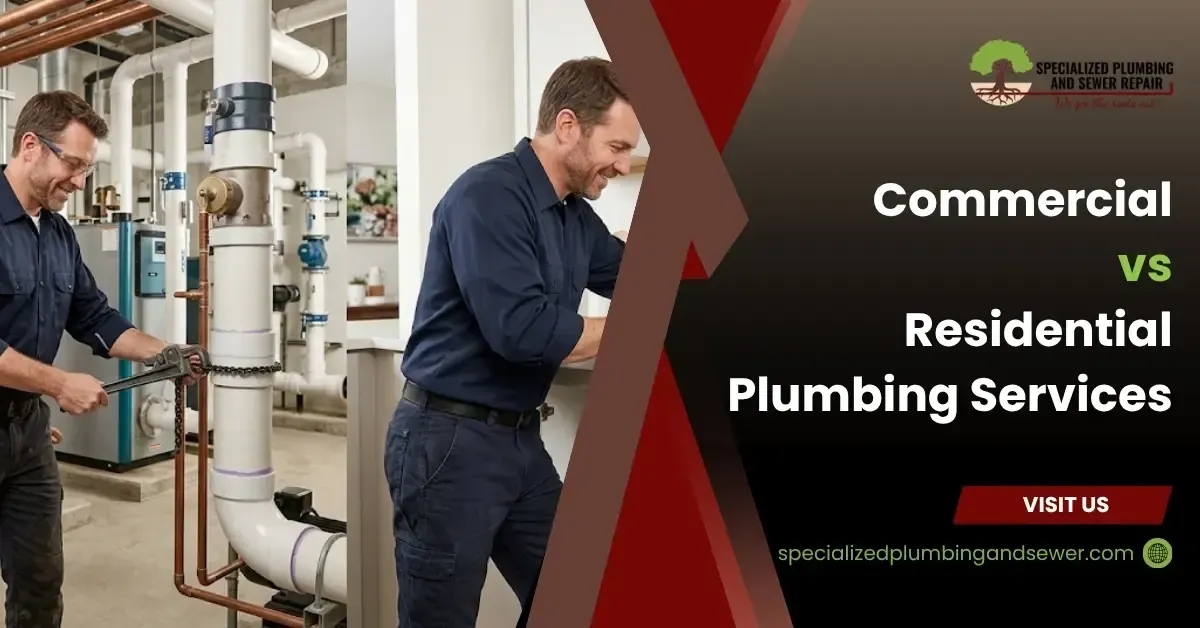
What Is the Difference Between Commercial vs Residential Plumbing Services?
Most people never think about this until they call the wrong plumber. Commercial vs residential plumbing services are not the same. The pipe sizes, the fixtures, the rules, and the costs are all different. This post breaks it down so you call the right person every time.
Home plumbing and business plumbing look similar on the outside. But the systems, the tools, and the skill needed are worlds apart. A home plumber walking into a restaurant kitchen is like sending the wrong person to the wrong job. Knowing the difference saves you time, money, and a lot of stress.
Key Takeaways
Commercial vs residential plumbing services differ in pipe size, water pressure, fixture type, repair cost, and the codes each property must follow.
Residential plumbing covers simple home systems that a residential plumber fixes in a few hours at a lower cost.
Commercial plumbing handles large buildings with heavy water usage across multiple floors and needs a trained commercial plumber.
The key differences between commercial and residential plumbing come down to system size, daily use, repair time, and local code requirements.
Specialized Plumbing and Sewer Repair in Roseville, CA handles both job types with over 20 years of experience and 24/7 availability.
What Is Residential Plumbing?
Residential plumbing is the water and drain system inside a home. Most Roseville homes have one or two bathrooms, a kitchen sink, and a single water supply line. The pipes are small, the water pressure stays low, and the system is straightforward. A residential plumber fixes a leak, clears a clogged drain, replaces a faucet, or swaps out a water heater. The residential plumbing cost stays low because the system is simple and easy to reach.
Residential plumbing focuses on everyday home water needs using polyvinyl chloride pipes, copper lines, and standard plumbing fittings. The home plumbing system also covers gas line checks for water heating and basic bathroom fixture repairs like shower heads and toilet parts.
Common residential plumbing services:
Faucet and tap repair
Toilet install and repair
Water heater replacement
Drain and sewer line repair
Water leak detection
Garbage disposal repair
What Is Commercial Plumbing?
Commercial plumbing is the water and drain system inside a business or large building. Restaurants, office buildings, hotels, and hospitals have a totally different setup from homes. These buildings serve hundreds of people daily. The pipes are bigger, the water usage is much higher, and the plumbing fixtures are heavy-duty. A commercial plumber handles grease traps, backflow prevention devices, fire sprinkler systems, and large sewer lines across multiple floors.
Commercial plumbing requires a plumber who reads blueprints, follows strict local codes, and manages water supply, wastewater, and sanitary sewer systems in large buildings. Commercial plumbing systems need strong pumps, large valves, and backflow controls to keep clean water moving safely.
Common commercial plumbing services:
Grease trap cleaning and install
Hydro jetting clogged drains
Backflow prevention device install
Sewer line inspection and repair
Industrial water heater systems
Storm drain and wastewater management
Gas line and heating system checks
Key Differences Between Commercial and Residential Plumbing Services
The difference between commercial and residential plumbing comes down to size, daily use, rules, and cost.
Scale and Pipe Complexity
Commercial buildings have far more pipes, valves, and connections than any home. A home sits on one or two floors. A commercial building can run ten or more. More floors means more pipes, more valves, and more piping and plumbing fittings. One problem in a commercial plumbing system can slow the whole building down. The added complexity means more planning, more tools, and more time on every repair.
Fixtures and Equipment
Commercial fixtures handle hundreds of daily uses and need far stronger materials than home fixtures. Homes use basic toilets, sinks, and faucets. A commercial plumbing system needs industrial-grade plumbing fixtures. Restaurants need grease traps and deep kitchen sinks. Hospitals need special valves and backflow prevention devices to protect health and stop water pollution. Hotels need showers, urinals, and pumps built for non-stop use. The EPA set WaterSense water efficiency standards that many commercial fixtures now follow to cut water waste.
Water Pressure and Pipe Size
Commercial pipes are wider and carry water at much higher pressure than home pipes. Home water pressure sits between 40 and 60 PSI. Commercial systems run at 80 PSI or higher to push clean water across multiple floors. Home pipes run from half an inch to one inch wide. Commercial pipes go from two inches to six inches or more. Industrial water heaters hold 100 gallons or more compared to 30 to 80 gallons in a home tank unit.
How Often Problems Come Up
Commercial plumbing breaks down more often because hundreds of people use it every single day. At home, a clog or leak shows up every now and then. In a busy office building or restaurant, clogged drains, grease buildup, and broken valves are regular problems. A blocked drain in a restaurant kitchen disrupts daily operations and costs the business money fast. That is why emergency services matter far more for commercial properties than for homes.
H3: Codes, Permits, and Compliance
Commercial plumbing must follow much stricter rules and permit requirements than home plumbing. Home plumbing jobs need basic permits. Commercial plumbing must pass health inspections, meet fire codes, and follow city rules. Restaurants need proper grease drain systems before passing inspection. The ADA requires commercial restrooms to have accessible sinks, toilets, and proper layouts. Check the full Americans with Disabilities Act fixture requirements to see what applies to your building. Backflow prevention rules also protect water supply lines from water pollution.
FAQs
Is commercial plumbing more expensive than residential?
Yes. Commercial jobs cost more because the systems are larger, parts are heavy-duty, and the work takes more time and skill.
Can a residential plumber work on a commercial building?
For small fixes, maybe. But real commercial plumbing needs someone trained in large systems, city codes, and commercial-grade fixtures.
What makes commercial plumbing harder to fix?
Commercial systems run across multiple floors with bigger pipes, higher pressure, and heavy daily use. Problems cost more and spread faster.
How do I know if I need a commercial plumber?
If your building serves many people, has multiple floors, or uses industrial fixtures, call a commercial plumber.
Does Specialized Plumbing handle both job types?
Yes. Specialized Plumbing and Sewer Repair handles both home and business plumbing across Roseville and nearby cities with 20 plus years of experience.
Call the Right Plumber Today
Now you know the real difference between commercial vs residential plumbing services. Home plumbing is simpler and cheaper. Business plumbing takes more skill, more time, and the right training to get right.
Call Specialized Plumbing and Sewer Repair today at +1 916-823-1255. The team covers Roseville and nearby cities day and night. You get straight answers, fair pricing, and a plumber who knows exactly what your property needs.
